
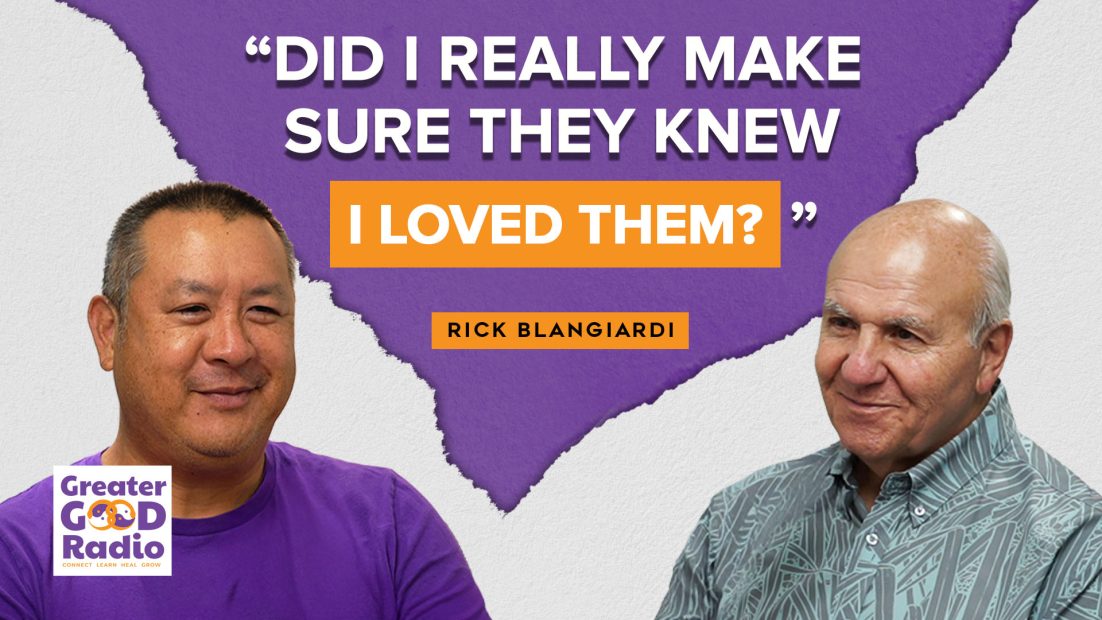
Rick Blangiardi Opens Up on Love, Loss, and Fatherhood
When most people see Rick Blangiardi, they see the Mayor of Honolulu, the former broadcasting executive, the coach, the leader. But in this intimate and emotional conversation, Rick pulls back the curtain on the experiences that shaped him long before public service ever entered the picture. What emerges is a portrait of a man formed not by titles or accomplishments, but by family—its love, its loss, and its lifelong responsibilities.
The Weight of a Father’s Legacy
Rick’s reflections begin with his own father, a hardworking immigrant who lived through the Great Depression, fought in World War II, and built a life through sheer grit and resilience. His father’s physical decline from mesothelioma was one of the most difficult chapters Rick ever witnessed—humbling, deeply human, and unforgettable.
Rick recalls the moment he realized his father didn’t have much time left. Driving together for what felt like an ordinary dinner, he could suddenly see the frailty in the man who had always been strong. That moment stayed with him, helping trigger his decision to return to Hawai‘i after 9/11 and his father’s passing.
“I buried my father, and that actually triggered my decision about coming back to Hawai‘i,” he shared. “I thought—you’ve gotta live life to its fullest.”
The loss didn’t just influence where Rick lived. It shaped how he lived and what he owed to the people he loved.
A Life Driven by Responsibility
Rick repeats a theme that quietly guided every major turning point of his life: his sense of responsibility to his children.
Even when professional opportunities required him to move to new cities—Seattle, New York, San Francisco—he never forgot the weight of being a father, even from afar. He describes years of guilt, pain, and uncertainty as he navigated roles that demanded sacrifice, especially when his children were young.
“There was a lot of internal pain during those years,” he admits. “I felt like I had to take care of my family, even if that meant being physically away.”
Rick wasn’t shy about the emotional cost. He shared stories of heartbreak, tough choices, and the internal conflict between providing for his family and being present with them. These were not political reflections—these were the admissions of a father still thinking about the moments he missed.
But through it all, one truth remained clear: every difficult move was made in the name of love.
Love That Evolved Through Life’s Hardest Lessons
Rick also speaks candidly about love—how he misunderstood it in his early years, how his first marriages struggled under the weight of ambition and circumstance, and how everything changed when he met his wife Karen at age 56.
By then, life had humbled him. He had changed—not through success, but through mistakes, reflection, and growth.
“At 56, the world had taught me a few things,” he says. “Your sense of awareness, your approach to love… it’s different.”
His relationship with Karen became a turning point, grounding him in gratitude, maturity, and emotional clarity. The transcript reveals how deeply he cherishes her, not just as a partner, but as someone who helped him understand love in a more patient, generous form.
Understanding Fatherhood in the Twilight of a Career
Now approaching his 80s, Rick sees fatherhood differently. His children are grown, independent, and living their own lives. But the love he feels today, he says, is as intense as when they were kids.
He hopes his children see him now—not as the man who moved away for work, but as someone who tried every day to do right by them.
“Maybe they didn’t always see the vulnerability,” he says. “But that responsibility, that love… it triggered decisions in my life.”
He speaks about wanting his kids to be proud—not because he became mayor, but because of the human being he became. The leadership style he’s known for—the authenticity, the teamwork, the personal connection—comes directly from the vulnerabilities and values he developed as a father.
Leadership Rooted in Love and Humanity
One of the most revealing parts of the conversation comes when Rick explains that everything he ever did as a leader—coaching, managing, running large organizations, and now serving as mayor—was influenced by his family and the lessons they taught him.
He sees leadership as an extension of fatherhood: caring, protecting, guiding, and giving your best even when the work is heavy.
“In leadership, you have to be vulnerable,” Rick says. “You want to be real. You want to be authentic.”
This philosophy echoes throughout the episode. Rick’s life has been full of big achievements, but the transcript shows his true compass has always pointed to something quieter and more personal: taking care of the people he loves, even if imperfectly.
A Conversation That Transcends Politics
What makes this episode stand out is how little of it focuses on Rick’s political life. Instead, it’s a rare glimpse into the heart of someone often seen only through the lens of public office.
Evan guides him into spaces few leaders ever reveal—grief, regret, hope, pride, and the timeless bond between a father and his children. It’s a conversation that resonates beyond Honolulu, beyond government, beyond careers.
It’s about family.
It’s about the choices we make.
It’s about the love we carry, even when life tests it.
And it’s about the belief that we can still grow, still heal, and still honor the people who shaped us.
CLICK HERE to SUBSCRIBE to our YouTube channel
Podcast: Play in new window | Download
Subscribe: Apple Podcasts | Spotify | RSS