
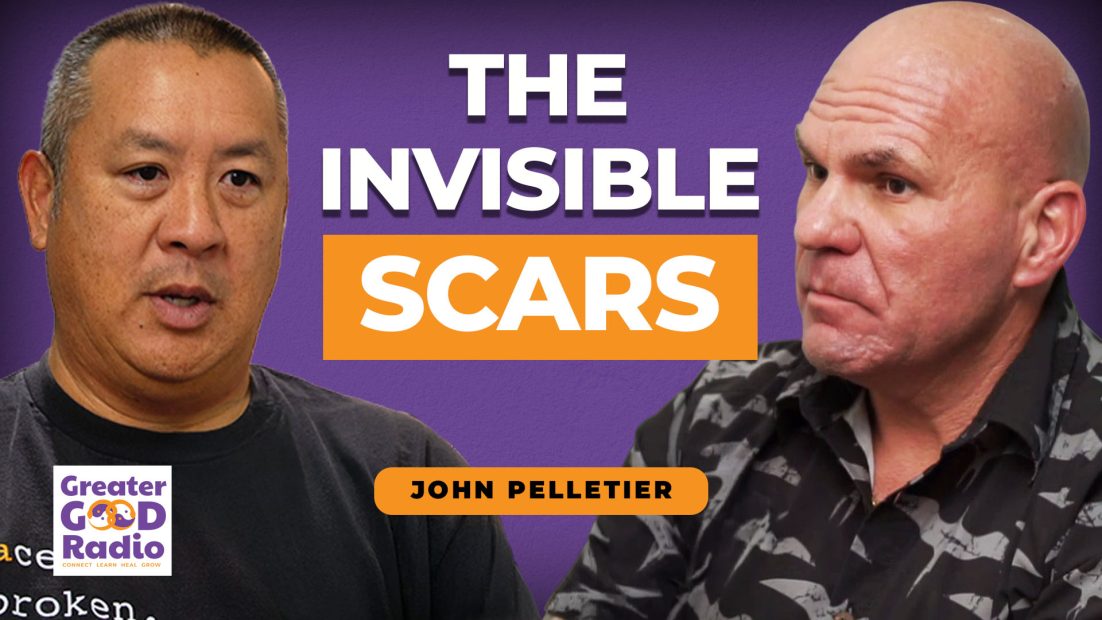
Leading Through Tragedy | Chief John Pelletier
Most people outside of Hawaii first saw Chief John Pelletier in the days after the Maui wildfires, standing in front of cameras and asking the public, with raw honesty, to stop walking through the remains of the dead. It wasn't a rehearsed soundbite. It was a third-generation cop trying to bring order to chaos while the whole world watched. As he put it, his approach has always been the same: speak from the heart, be real with people, and treat them as one human being to another. That moment introduced Maui to a chief whose entire career, in many ways, had been preparing him for it.
A Third-Generation Cop, Shaped by Family
Pelletier comes from a lineage of law enforcement. His great-uncle was a detective sergeant with the Buffalo Police Department, his father was a lieutenant on the same force, and his stepmother became the department's highest-ranking woman and highest-ranking Black officer. By the time he met his wife, he was already several years into his own career, and she understood exactly what she was marrying into.
That understanding has mattered more than most people realize. Pelletier recalled leaving his kids' birthday party for a hostage rescue and walking out the door on Christmas Eve, minutes after tucking his young children into bed, for a call that kept him out until 5:30 the next morning. None of it would have been possible, he said, without a spouse who could accept that some nights, he simply had to go.
From the Las Vegas Strip to "One October"
Before Maui, Pelletier spent more than 22 years with the Las Vegas Metropolitan Police Department, eventually commanding the Las Vegas Strip as captain. That role placed him at the center of the deadliest mass shooting in American history: the October 1, 2017 attack at the Route 91 Harvest festival, where 22,000 people came under fire and 58 people died immediately, with the toll later reaching 60.
He walked through that night in detail — the phone call that interrupted a quiet evening at home, his wife's words as he ran out the door ("hug me and tell me you love me"), and the split-second decisions he made racing to the scene: which captain would go to the hospital, which would hold the downtown command, and where to anchor an incident command post with the logistics it would need. A hard-earned lesson from an earlier incident — that command posts fail when too many people and too much noise crowd the room — shaped how he ran that response, and later, how he would run Maui's.
Bringing a Lifetime of Crisis Experience to Maui
Pelletier doesn't describe his path as something that happened to him. He sees a throughline: his years as a SWAT commander prepared him for One October, and One October prepared him for what came next on Maui. He's careful to frame it as a team effort rather than a single person's story, but the pattern is one he returns to often — each role building the capability for the next, harder one.
That philosophy was tested in full when he became Maui's police chief in December 2021, stepping in as the first chief from outside Hawaii, with a mandate to bring transparency and rebuild trust. Less than two years later, the Lahaina wildfires would ask more of him and his department than anything in his career before it.
August 8 and the Hardest Two Months
Pelletier didn't hesitate when asked to name the hardest stretch of his career: the two months following the Maui wildfires. The department didn't learn fatalities had occurred until 8 a.m. the morning after the fire, and what began as hope for rescues quickly became a methodical, painful process of recovery, identification, and notification — in that exact order, because there was no other way to do it.
He leaned on relationships built over decades, securing rapid DNA testing resources and bringing in FEMA and outside agencies, knowing it would still take 72 hours for help to reach an island. Through it all, one principle held: these were not numbers or names on a list. They were neighbors. Some residents had been begged by officers the night before to evacuate and hadn't left. Pelletier was firm that every single notification to a grieving family would be delivered in person, with compassion — not over the phone, not by chance.
Building What Didn't Exist
To carry out that promise, Pelletier had to ask something of his officers that no chief should have to ask. He approached two traffic unit officers individually and gave them an assignment with no precedent: personally notify every family who had lost someone. What they built became the Morgue Identification Notification Task Force — MINT — a unit that didn't exist before the fires and still informs how the department handles its cold case work today.
Pelletier singled out two officers who exemplified what the department was asked to carry that summer: Calvin Dawn and Cameron Papino, who saved 15 people from a single call in Lahaina, narrowly escaping with their own lives. Papino did this while having lost four family members of his own. For Pelletier, stories like this aren't abstract — they're the reason he says he'll be forever grateful for the people he leads.
Family First: Rebuilding a Department's Wellness
Long before the fires, Pelletier had already begun reshaping how the department cared for its own people, restructuring patrol shifts from grueling 13-to-18-hour days into a healthier rotation, expanding the chaplain program eightfold, and building out wellness resources spanning the physical, financial, spiritual, and emotional. His reasoning is simple: if officers aren't well, nothing else the department does — community trust, crime fighting, transparency — is sustainable.
That philosophy showed up in one story Pelletier had never shared publicly before this conversation. After the fires, officers who had lost everything — homes, cars, even their uniforms — needed help quietly. The department converted its defensive tactics room into a donation center stocked with bedding, diapers, toys, clothing, and groceries, so that families could come in discreetly, with their dignity intact, and take what they needed. It wasn't required. It was, in his words, simply the right thing to do.
Remembering Officer Suzanne O
The conversation turned to Officer Suzanne O, a Maui officer originally from American Samoa who was killed in the line of duty. Pelletier described her as the finest of them — someone who would buy food for unhoused people she encountered on calls, rather than simply move them along, and who died using her body as a shield for a fellow officer during a search for an armed suspect.
He shared a personal memory of working alongside her early in his time on Maui, on a difficult case involving the abuse of a child, and the quiet, shared understanding that passed between two officers who had just lived through something hard together. He still wears her bracelet. Since her death, two new female officers have joined the department's honor guard inspired by her example — a small, ongoing testament to the kind of person she was.
A Department Defined by Its People
Pelletier is direct about what makes the Maui Police Department special to him: not the equipment or the innovation, but the people. He pushed back firmly on false narratives that circulated after the fires — claims of buses full of missing children, bodies found on Lanai — pointing to after-action reports and body camera footage that told a different story: an estimated 20,000 people, including visitors, were saved that night.
In the years since, the department has grown rather than retreated — adding a canine unit (the only one of its kind in the state), an aerial drone program, and a fourth command bureau, while violent crime has trended down. For Pelletier, that growth in the face of tragedy says something specific about the people he serves alongside: that they are resilient, and that they show up for each other and for their community, especially when things aren't easy. It's a standard he holds himself to as much as anyone, and three years removed from the worst day in his department's history, it's the one he says still defines them.
CLICK HERE to SUBSCRIBE to our YouTube channel
Podcast: Play in new window | Download
Subscribe: Apple Podcasts | Spotify | RSS