
What They Don’t Tell You About the US Senate
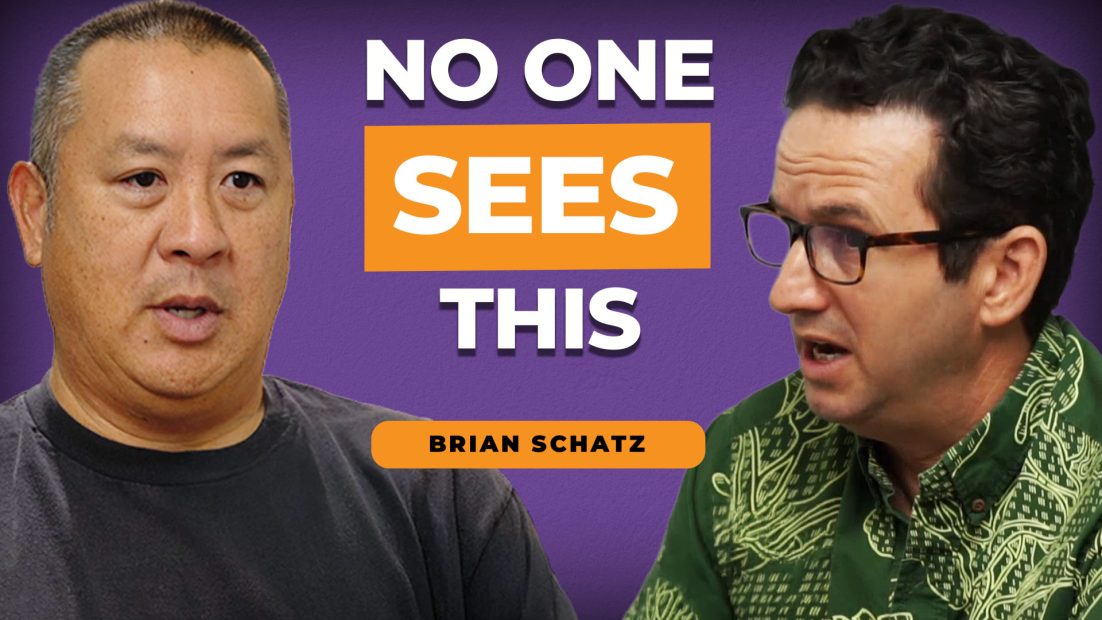
When Senator Brian Schatz sat down with Evan on Greater Good Radio, it had been nearly 20 years since their last conversation, back when Brian was running Helping Hands Hawaii. A lot has changed since then. Brian is now Hawaii's senior senator and one of the most influential Democrats in Washington. But what stood out most in this conversation wasn't the title. It was how candidly he talked about the parts of the job you never see on the news.
Here's what we learned about how the Senate actually works, and what it takes to do the job well.
You Can't Get Anything Done Alone
Brian admitted that when he arrived in Washington, he assumed he wouldn't get along with Republicans. His disagreements with them on policy run deep, and in Hawaii's state legislature, Democrats hold such a large majority that bills pass without Republican votes. The Senate is different. "You basically can't pass anything without both parties," he said. So he started building relationships out of necessity, and some of them turned into real friendships. He spent a full year fighting with Senator Thom Tillis of North Carolina, and the two of them ended up as buddies.
That kind of unlikely alliance is behind one of the bills people stop him about most often: protecting kids online. Brian has worked with Senator Ted Cruz on legislation addressing AI chatbots and kids on social media, including keeping young children off social media until at least age 13. He says the issue doesn't split left versus right. It splits by age, with the middle-aged senators who are raising kids right now feeling it most. Parents tell him it's nearly impossible to be the only family holding back a phone, and a federal law would take care of the FOMO problem for everyone.
Polarization Is a Business Model
If the Senate seems like nothing but endless fighting, Brian says that's partly because of how information reaches us. "There is no money in telling people that folks are getting along," he said. "There's only money in polarization." He learned this firsthand. An anti-Trump post he made performed magnificently, while a post he was far prouder of, about a bipartisan deal that funded clean energy, got almost no attention.
His worry is that people see none of the cooperation that happens beneath the surface. They lose hope, and then they either get angry and want to destroy the other side or tune out entirely. "And I think both things are bad," he said.
Welcome to the Clip Economy
Those heated hearing clips you see on social media? Most hearings aren't like that. According to Brian, most of them are adult and businesslike, with senators asking questions because they actually want the answers. But some members show up just for the clip. They roll in a minute before their turn, deliver a prepared five minutes, and leave, often without hearing that the person before them already asked the same thing. Within the hour it's on TikTok.
Brian once questioned Secretary Hegseth and focused on getting specific answers. The exchange didn't go viral, and he says he has to keep reminding himself that real accomplishments matter more than page views. "Being a good senator means trying to depolarize, and going viral is, like, diving headfirst in the algorithm," he said. He sees this pattern even more in the House, where some members treat the job more like being an influencer than a lawmaker.
Words Are Actions
One of the most important lessons Brian learned came early, when he was a 29-year-old state legislator. On TV, asked what might be privatized under a new law, he casually named the Bureau of Conveyances just to have an answer. Within hours, about 75 bureau employees showed up at his office. They explained how hard they worked with outdated technology. One of them told him something he never forgot: when someone in power says something like that, their whole family is scared they won't be able to keep their house.
That experience changed how he communicates. Today, before he posts something, he pictures a couple of stadiums full of people and asks whether he'd say it into the microphone. The lesson cuts both ways, too. When universities were still holding Native ancestral remains and stolen artifacts despite a federal law requiring their return, Brian wrote them a letter and gave a speech. Most of them began working with tribes to repatriate those items. "I have a voice and it's relevant," he said, "and I gotta put it to good use."
It's a Physically Grueling Job
People don't often think of the Senate as a physical test, but Brian says it is. Fifteen-hour days, sessions that run through the night for no particular reason, and constant travel all take their toll. For a senator from Hawaii, that travel is even more demanding. At 53, he's younger than most of his colleagues, and he still describes the schedule as grueling. He also calls it a pretty dumb way to do business.
Hawaii Is Still an Afterthought in Washington
Brian estimates he spends about 35% of his time explaining Hawaii to people. During negotiations on the infrastructure bill, the definition of broadband infrastructure would have shut Hawaii out, because our "last mile" runs underwater. While working through it, he dealt with a senior Senate staffer, a sophisticated lawyer in his 30s, who thought Hawaii sat right off the coast of California, next to Catalina Island. Another colleague, planning a trip that started in Hawaii and continued to Japan, suggested adding India while they were in the area.
The pattern holds in foreign policy as well. Lawmakers say they care about the Asia Pacific, but their trips and their bills tend to focus on Western Europe, the Middle East, and sometimes Africa. Brian says he's happy to keep explaining Hawaii, because he's proud of this place.
Being Normal Is a Superpower
Brian jokes that he picked the one job where simply being normal makes you stand out. Senators are extraordinarily talented people, and that often comes with a different way of being. He credits growing up in Hawaii with teaching him to read a room and to slow down just enough to be present. "If you're rushing in and out of someone's house, that ain't gonna work," he said. With demand for his time high enough to fill 50 meetings a day, he would rather be fully present than end the day unable to remember anything he did.
He also finds it funny that people at home see him as high-energy and hard-charging, while people in Washington see him as the super mellow aloha guy. He thinks both are probably true.
The Accomplishment He'd Keep
When Evan asked which one accomplishment he'd keep if he had to give up all the others, Brian chose the expansion of Papahānaumokuākea under President Obama. It's the largest marine protected area on the planet, at about 500,000 square miles. He believes it very likely wouldn't have happened without his team, which worked closely with West Kauai fishermen and Native Hawaiian organizations to build community support before bringing the Obama administration on board.
The results have gone beyond conservation. Protected areas act as "fish factories," Brian explained, and since the monument was established, the ahi fishery has become more productive and there's more sashimi and poke available in Hawaii. It's something Hawaiians knew long before scientists confirmed it.
Go Slow to Go Fast
At the end of the conversation, Evan asked what message Brian would leave for himself if he were going to forget everything else. His answer was simple: "You gotta go slow to go fast." In his 20s, he believed that slowing down or enjoying the moment meant getting lazy and botching the work. Now he sees it differently. You can stay ambitious and still take time to experience your life while you're living it.
CLICK HERE to SUBSCRIBE to our YouTube channel
Podcast: Play in new window | Download
Subscribe: Apple Podcasts | Spotify | RSS