
Why I Left My Dream Job to Lead a Non-Profit
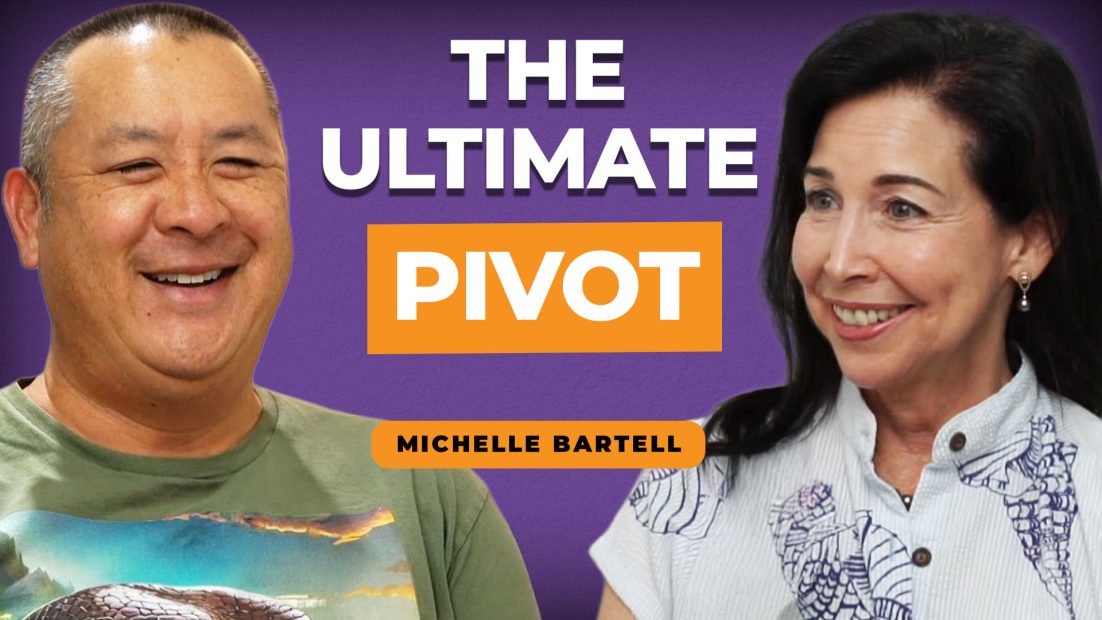
Michelle Bartell will tell you plainly that she had the best job in the whole bank. As Senior Vice President and Director of Community Advancement at American Savings Bank, she spent more than a decade running the bank's charitable giving, volunteer programs, and community partnerships, the kind of work that filled her cup every day. So when she stepped away to become President and CEO of Aloha United Way, it wasn't to escape something. It was to answer a question she'd been carrying for years: what could she do on a larger scale, with greater impact?
In this conversation with Evan Leong, Michelle opens up about the timing, the sacrifices, and the deeply personal reasons behind that leap. She covers why she turned the job down at first, what she learned while waiting, and why her own children became part of her motivation.
"I Had the Best Job in the Whole Bank"
Michelle didn't arrive at ASB as a corporate lifer. She'd spent years fundraising at Montessori Community School, where she joked with new parents every year not to avoid her in the parking lot. Moving to a for-profit bank felt uncomfortable at first, almost "corporate-y." But nine days into the job, she attended a bank fundraiser: a curling tournament at Ice Palace, complete with specially prepared ice and Olympic athletes. Walking to her car that night, she realized she still had the feeling she'd chased at every Montessori gala, the feeling of a community rallying around a shared purpose.
"Okay, this job is gonna be okay," she remembers thinking. That feeling became her compass. She describes it as her purpose in life: bringing people together around something good and lasting for the community.
Saying No to the Perfect Next Step
Aloha United Way approached Michelle more than once about the CEO role, and she turned it down. In January 2020 she still had the text she sent the recruiter, saying the job was in many ways the perfect next step, but she wasn't ready. She had just hired a new team member, the bank was starting important work on affordable housing, her daughter was about to graduate from high school, and her son was a high school freshman.
"I know myself. I'm a workaholic," she admits. She knew a job that size would come at the cost of time with her family, and she was already carrying mom guilt from the move to the bank. She credits her husband, who became the family cook and chauffeur, for making her years at ASB possible. Still, she wondered whether she had just blown her chance. If she's honest, she says, part of the hesitation was also a lack of confidence.
The Timing That Turned Out to Be a Gift
Within weeks of that decision, COVID arrived. Looking back, Michelle believes someone was looking out for her. She isn't sure she would have succeeded leading Aloha United Way through the pandemic. Instead, she spent those years at the bank working on affordable housing, joining new collaborations like the Funder Hui, and building the relationships, the pilina, that sustain her work today. Those rooms, she says, are what finally prepared her for the role.
Life also tested her in other ways. In 2021, she learned she carried a breast cancer gene mutation. After extensive research, she chose to undergo major risk-reduction surgeries on the continent, in the middle of the pandemic. ASB supported her through that time away. "If I had taken on that job while all of these other things were going on," she reflects, "I just think it would've been kind of a train wreck."
A Calling That Was Already in Her Blood
Michelle grew up an Army kid, moving every few years and never quite having a hometown. Her father, by contrast, grew up in San Francisco's North Beach surrounded by aunts, uncles, cousins, and a grandmother known as the "First Lady of North Beach." That grandmother was a tireless community volunteer who helped start the Salesian Boys Club at Saints Peter and Paul Church, the same church where Michelle would later marry. Michelle didn't learn much of that history until she was an adult.
Yet the instinct showed up early. As a third or fourth grader newly arrived in Virginia, she watched the Jerry Lewis Labor Day Telethon and insisted on going door to door collecting coins, then had her mom drive her to the mall to pour them into the donation jar. Being the new kid taught her to observe, adapt, and ask what she could add to a community. Maybe, she says, that is part of why she's drawn to this work.
Finding Home in Hawaiʻi
Michelle came to Hawaiʻi 31 years ago, following a relationship that didn't last. Just as her lease was ending and she was considering a move back to San Francisco, she met the man who is now her husband of 28 years. Hawaiʻi has since become home for more than twice as long as anywhere she's ever lived.
What keeps her here, she says, is the sense of community and of being welcomed. Raising her kids near their aunties, uncles, and lifelong friends gave them the rooted childhood she never had. That gratitude shapes how she sees her responsibility to this place.
Why Her Kids Became Part of the "Why"
The moment that shook Michelle most came in September 2020, on a plane to drop her daughter off at UC San Diego. Her daughter was double-masked and crying. A few days later she explained why: she realized she would probably never be able to afford to live in Hawaiʻi again. A couple of years later, Michelle's son joked that in 10 years he'd still be living at home, saddled with student debt.
"How do our kids see this?" Michelle asks. It's not a message she ever gave them, but they absorbed it anyway. That realization, together with the ALICE data showing that more than 40 percent of Hawaiʻi households struggle to make ends meet despite working, drives her work at Aloha United Way. She wants the next generation, Native Hawaiians and everyone who calls Hawaiʻi home, to stay and thrive without having to look to the continent for something easier. If we lose them, she believes, we lose what makes this place special.
Leading Without Needing the Credit
Asked about the hardest lesson she learned at the bank, Michelle points to ego. When you're trying to prove yourself, it's hard to balance wanting recognition with serving the team and the need. A mentor once told her it doesn't matter who takes the credit as long as the good work gets done, and some painful experiences finally drove that home.
Today she tells her own team that a leader's effectiveness comes from getting work done through other people. That means letting them own the wins, grow, and build their careers. "That's what I thrive on now," she says, adding that leaders have a kuleana to prepare the next generation for their turn.
What the Work Looks Like Now
Eighteen months into the role, Michelle's most powerful moments haven't come from her office. During the Kona low storms, she sat at Aloha United Way's in-person 211 table at the Waialua community assistance center. Her very first visitor was a mother from Otake Camp whose home had been swept onto a bridge. Michelle helped her through stacks of forms. Over the following weeks she came to know families by name and by story. She'd rather spend a day helping someone directly, she says, than a week answering emails.
One story captures it all. A newly trained 211 specialist was evacuated from her home in the middle of the night, wading through chest-deep water while holding her toddler above her head. Her own 211 colleagues connected her to help, and she in turn became the go-to resource for her entire neighborhood. When she finally met Michelle in person at the assistance center, she wrapped her in a hug and cried. To Michelle, that moment is why the work matters: helping people find their footing during the worst times of their lives, and watching that help ripple outward through community.
CLICK HERE to SUBSCRIBE to our YouTube channel
Podcast: Play in new window | Download
Subscribe: Apple Podcasts | Spotify | RSS